Logistics
6 min
The hidden costs of ZPL label changes in 3PL warehouses , from IT projects to API calls. A TCO breakdown that will change how you think about labels.
zplflow team
Jul 17, 2026
Every 3PL knows the scenario. A client calls: “We need the barcode changed on our shipping labels.” Or: “Can you add our logo?” Or: “Amazon FBA now requires FNSKU on every label , can you update the template?”
It sounds simple. It never is.
Here’s what actually happens when a client asks you to adapt a ZPL label:
Total time: 2-4 weeks. Total cost: €2,000-5,000 (including coordination, testing, and the inevitable round of “actually, can you also change the font size?”).
The €3,000 IT project is the visible cost. The invisible costs are worse:
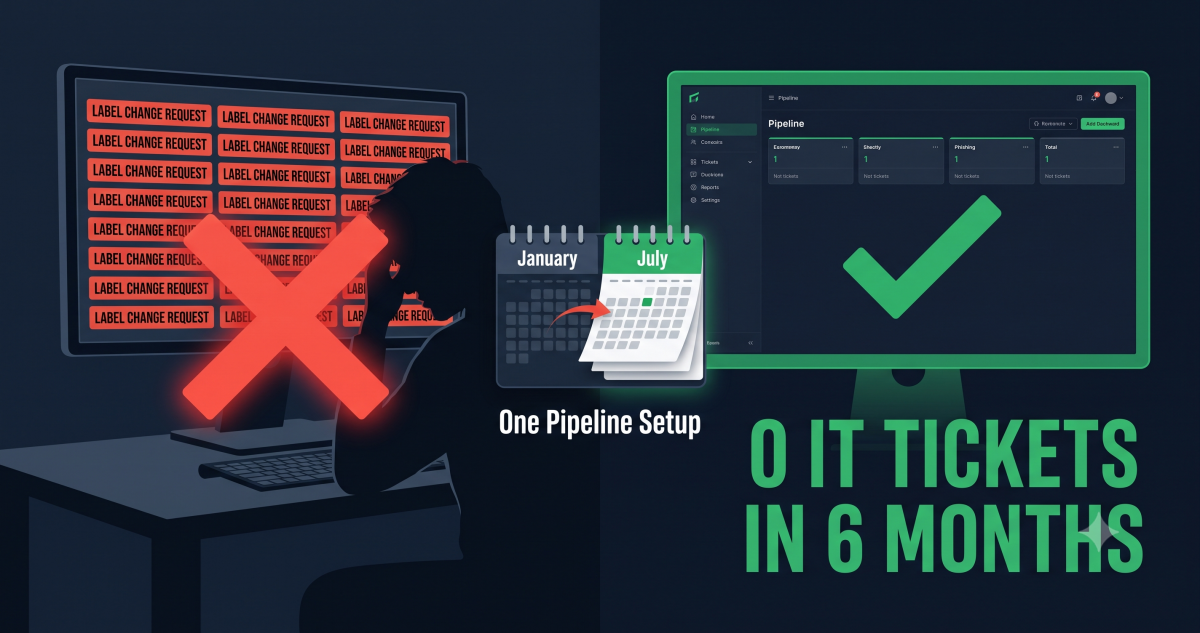
One 3PL I spoke with estimated they spend 8 hours per month on label adaptations across all clients. At €50/hour, that’s €400/month , €4,800/year , on a problem that shouldn’t exist.
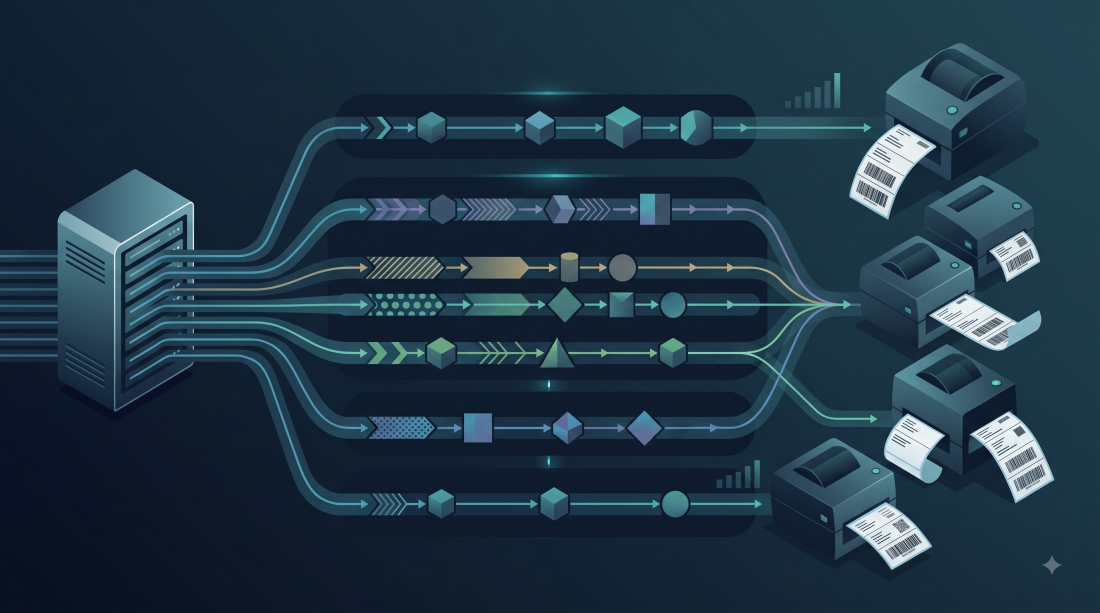
Here’s the same scenario with an API-first label infrastructure. Even better: Step 1 doesn’t need IT at all. Your account manager can define the pipeline from the Admin UI , configure transformations, test them on sample labels, and generate a pipeline ID. IT only needs that ID to wire it into the client’s integration.
An account manager configures the transformations, no IT involvement needed.
The pipeline ID is all IT ever needs to see.
curl -X POST https://api.zplflow.io/v1/pipelines \
  -H "Authorization: Bearer lb_your_key" \
  -H "Idempotency-Key: setup-pipeline-001" \
  -H "Content-Type: application/json" \
  -d '{
    "name": "client-acme-shipping-label",
    "steps": [
      {"type": "replace_text", "search": "OLDBARCODE", "replace": "1234567890"},
      {"type": "add_barcode", "barcode_type": "code128", "x": 100, "y": 200, "height": 50, "value": "{{tracking_number}}"},
      {"type": "add_text", "x": 50, "y": 350, "font_height": 20, "value": "{{client_name}}"}
    ]
  }'

# Response: { "id": "9f3c1d2a-...", "name": "client-acme-shipping-label", ... }
Send ZPL as base64; dynamic values go in the “variables” map.
curl -X POST https://api.zplflow.io/v1/pipelines/9f3c1d2a-.../apply \
  -H "Authorization: Bearer lb_your_key" \
  -H "Idempotency-Key: label-2026-07-07-001" \
  -H "Content-Type: application/json" \
  -d '{
    "documents": [
      {
        "zpl_base64": "XlhBeF0ACj4wX0A...your-original-zpl-base64...",
        "variables": {
          "tracking_number": "1Z999AA10123456784",
          "client_name": "ACME Corp"
        }
      }
    ]
  }'

# Response: transformed ZPL in base64, ready for your Zebra printer
# Time: ~20 milliseconds
# Cost: 1 token (all three DOM steps fall within the base quota)
Total time: 5 minutes (including writing the pipeline the first time).
Total cost: 1 token per label (all three DOM steps fall within the base quota). On the Growth plan at €149/month with 240,000 tokens, that’s €0.0006 per label.
| IT Project (today) | API Pipeline (zplflow) | |
|---|---|---|
| First label change | €2,000-5,000, 2-4 weeks | 30 min setup, €0 (free tier) |
| Each subsequent change | €500-2,000, 1-2 weeks | 5 min, ~€0.0006/label |
| Annual cost (10 changes/year) | €10,000-25,000 | €1,788 (Growth plan) |
| IT team time | 200+ hours/year | 5 hours/year |
| Client wait time | 2-4 weeks per change | Minutes per change |
| Risk of errors | High (manual ZPL editing) | Low (tested transformers) |
If you’re a 3PL managing labels for 20+ clients, you’re not paying for “a label change.” You’re paying for an infrastructure problem that recurs every month.
The question isn’t “how much does one label change cost?” It’s: “How much will label changes cost me over the next 3 years?”
Conservative estimate: €30,000-75,000 in IT projects, plus hundreds of hours of your team’s time.
Or: one API integration, €149/month, and every future label change takes minutes instead of weeks.
If this sounds familiar, here’s a zero-risk experiment:
If it works, you’ve just eliminated your next IT project for labels. If it doesn’t, you’ve spent 15 minutes and zero euros.
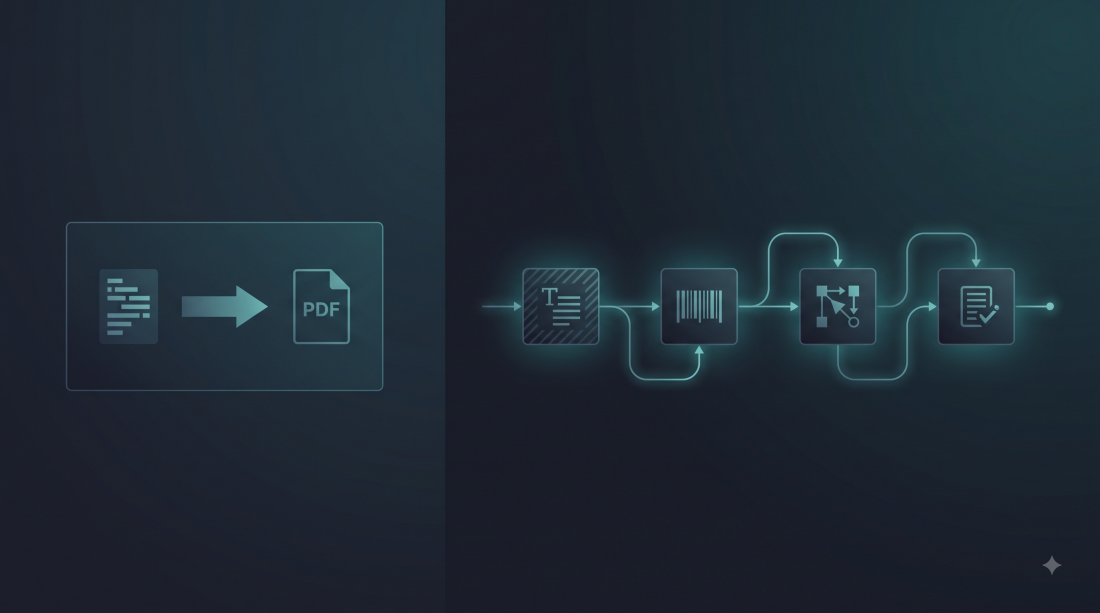
zplflow is label infrastructure for 3PLs. API-first, zero maintenance. Convert PDF to ZPL, transform labels with programmable pipelines, print on any Zebra.
Tags